
Designers vs AI: Finding the Balance Between Creativity and Technology
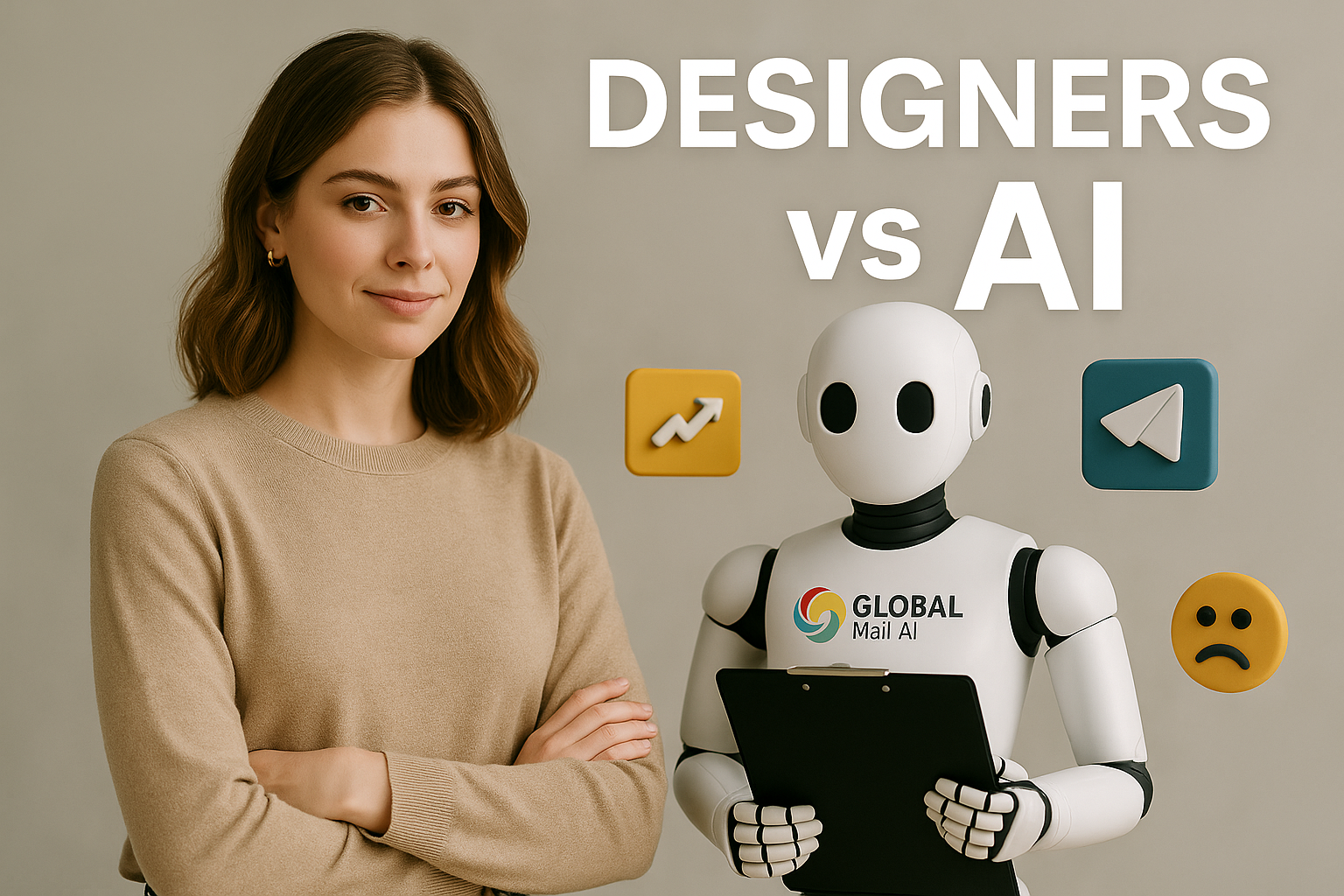
The rise of artificial intelligence in design has sparked one of the most debated questions in the creative world — will AI replace designers? The short answer is no. But the longer, more interesting answer is that AI is changing what it means to be a designer entirely. Instead of taking jobs away, AI is reshaping how creative professionals work, think, and produce. The question isn’t whether AI will replace designers, but how designers will use AI to redefine creativity.
From AI image generators like DALL·E and Midjourney to smart layout tools like Canva AI and Framer AI, design automation is everywhere. Businesses are creating logos, websites, and ad creatives in minutes. But while AI can produce design assets fast, what it lacks is intention — the human touch that turns pixels into purpose.
The Role of Human Designers
A designer’s job has never been just about making things look good. It’s about solving problems, evoking emotion, and telling stories through visual language. Great design requires empathy, cultural understanding, and creativity that goes beyond patterns or algorithms. While AI can learn from data, it can’t feel — and design at its core is about connecting with people on an emotional level.
Human designers bring context and originality to every project. They understand nuance — how a logo feels to a customer, how color psychology affects perception, and how design supports brand identity. These are areas where AI still struggles because creativity isn’t always logical — it’s intuitive, experiential, and human.
The Power of AI in Design
That said, AI is an incredibly powerful creative ally. It can handle repetitive or time-consuming tasks — like resizing assets, cleaning up images, or suggesting design variations — freeing designers to focus on big ideas. Tools like Adobe Firefly and Runway ML use AI to enhance workflows, generate visual concepts, and even simulate real-world environments for testing designs.
AI also democratizes creativity. Not everyone can afford to hire a professional designer, but AI tools make it possible for small businesses, entrepreneurs, and creators to build beautiful, functional designs quickly. That accessibility is what makes AI design tools revolutionary — they bring professional-quality visuals to everyone.
Where Designers and AI Meet
The real power lies in collaboration, not competition. The future of design isn’t “AI vs Designer” — it’s “AI with Designer.” AI can handle the technical side of things — generating drafts, layouts, or images — while the designer refines the vision, applies brand context, and adds emotional depth. In this relationship, AI becomes a creative partner, not a replacement.
For example, a designer could use Midjourney or Leonardo AI to generate visual inspiration, then refine those ideas in Adobe Illustrator or Figma. Or they could use Framer AI to build a website prototype instantly, then customize it manually for brand alignment and storytelling. The workflow becomes faster, smarter, and more creative than ever before.
The Limitations of AI Design
Despite the hype, AI still has clear limitations. It lacks originality — everything it creates is derived from patterns found in existing data. It can’t innovate beyond what already exists. AI also lacks ethics and judgment; it can generate technically perfect designs that miss cultural sensitivity, accessibility standards, or emotional resonance.
Another major limitation is authorship. When AI generates art or design, who owns it? This question of copyright and intellectual property continues to evolve legally and ethically. For businesses, that’s a serious consideration — especially when using AI-generated assets in branding or marketing.
How Designers Can Leverage AI Effectively
The best designers aren’t resisting AI — they’re learning how to use it. Here’s how modern creatives are integrating AI into their workflows:
• Rapid Prototyping: Use AI tools like Uizard or Framer to generate instant prototypes and iterate faster.
• Visual Exploration: Experiment with AI-generated visuals for brainstorming and concept testing.
• Efficiency Boost: Automate repetitive design tasks like cropping, color matching, and resizing.
• Creative Expansion: Use AI to test multiple design directions that might not have been possible manually.
• Data-Driven Decisions: Combine AI analytics with human creativity to design for performance and engagement.
When designers learn to guide AI with the right prompts and creative direction, they can achieve outcomes that neither could reach alone. AI becomes the assistant — fast, efficient, and tireless — while the designer remains the visionary.
The Future of Design: Human-Led, AI-Enhanced
The design industry is entering a new era — one where creativity is enhanced, not replaced. AI tools will continue to evolve, generating increasingly sophisticated visuals, predicting user behaviors, and personalizing experiences. But even the most advanced algorithms can’t replicate human intuition, empathy, and storytelling.
The designers who thrive in this new landscape will be those who embrace AI as a creative collaborator. They’ll use it to push boundaries, test ideas faster, and bring imagination to life in ways never before possible.
The future isn’t Designers vs AI — it’s Designers powered by AI.
| Category | Human Designers | AI Design Tools |
|---|---|---|
| Creativity & Originality | Driven by imagination, experience, and emotional intelligence. Can produce unique, context-aware ideas. | Generates designs based on existing data and patterns — fast but lacks emotional depth or originality. |
| Speed & Efficiency | Slower but more deliberate — every element is crafted intentionally. | Exceptionally fast — can produce hundreds of design options in seconds. |
| Adaptability | Can adapt to trends, audiences, and client goals with nuance and sensitivity. | Learns from data but struggles with cultural context or rapidly changing trends. |
| Emotional Understanding | Understands emotional tone, empathy, and brand storytelling. | Lacks human emotion — cannot truly understand feeling or sentiment. |
| Cost & Accessibility | Higher cost but delivers personalized, strategic design work. | Affordable or free, making professional-quality design accessible to anyone. |
| Learning & Growth | Constantly evolves with experience, trends, and feedback. | Learns only from data inputs — cannot innovate independently. |
| Ethics & Authorship | Maintains creative ownership and accountability. | Raises copyright and authorship concerns — ownership is often unclear. |
| Best Use Case | Complex branding, emotional storytelling, and creative strategy. | Fast prototyping, marketing visuals, and generating design ideas at scale. |
